
How to Plan a Trip to Greece Without Losing Your Mind

This page may contain affiliate links. As an Amazon Associate, I earn from qualifying purchases. If you click on a link and make a purchase, I may receive a small commission at no extra cost to you. Thanks for supporting my work! You can read more in my Privacy Policy.
You want to know how to plan a trip to Greece, but every time you try, it spirals.
You open your laptop.
You type “best Greek islands.”
Three hours later you’re deep in a Reddit thread about ferry strikes, someone is passionately arguing about Paros vs Naxos, you have 19 tabs open, and you’re questioning every life decision that led you here.
Meanwhile your spouse is like, “So… are we going to Greece or not?”
You’re excited.
You picture the blue domes.
The sea that looks Photoshopped in real life.
Sunset dinners where you sip wine and think, “Why do I not live here?”
But planning it?
Planning feels like assembling IKEA furniture without instructions.
In Greek.
If you’re a first time Greece traveler trying to plan a 7 to 14 day trip, this is exactly where most people get stuck.
Which islands make sense together?
How many days do you actually need?
Do you start in Athens or end there?
Is Santorini magical or just an overcrowded Instagram backdrop?
Deep breath.
This is where I slide your laptop gently closed and say, I’ve got you.
I’ve planned trips all over Greece.
From navigating Athens jet lag and island hopping between Santorini, Naxos, Mykonos, and Crete in peak and shoulder season, first as a couple and later with kids in tow.
I’ve picked “perfect” beachfront hotels only to discover they sit at the end of a pitch-black dirt road that feels mildly terrifying to drive at night.
I’ve backtracked across islands like I was competing in the Olympic sport of Poor Route Planning.
I’ve crammed three islands into a week and ended up so exhausted I caught the flu on vacation.
Nothing says dreamy Mediterranean escape like DayQuil and regret.
Here’s what I’ve learned.
Greece is not a country you “win.”
You do not need to see everything.
You do not need five islands in ten days.
You do not need to sprint through paradise like you’re late for a connecting flight.
Planning Greece well is about fewer islands.
Smarter sequencing.
Staying in one region.
Giving yourself enough nights to actually exhale.
In this guide, I’m going to show you:
- Why the number of days you have drives every other decision
- How to choose islands without falling into full blown decision paralysis
- Exactly how many islands to visit and the simple rule I follow now, minimum three nights per island, preferably five, so your trip feels magical, not like an island drive by
I’ll walk you through the exact framework I use to plan Greece trips.
By the end, you’re going to feel clear.
Calm. Confident.
Instead of 19 tabs open and mild panic, you’ll have an actual plan.
Okay. Let’s build your Greece trip the right way.
The Greece Trip Planning Framework at a Glance
- Lock in your real number of days first
- Choose one region, not just a pretty island
- Pick your islands within that region
- Choose accommodations based on location, not just looks
- Book flights and ferries with realistic timing
- Build in breathing room so the trip actually flows
Each step is broken down below. If you already have a draft itinerary and want a second set of eyes on it, that’s what itinerary reviews are for.
Planning Greece vs Italy: Why They’re Not the Same

If you’ve planned trips to Italy, France, or even Hawaii before, you might think, “I’ve got this.”
I love that confidence.
But Greece will humble you. In a charming way.
Here’s what no one tells you when you’re figuring out how to plan a trip to Greece:
It doesn’t function like most other European countries.
And that’s not a flaw. It’s part of the magic.
There Is No Magical Train System Outside Athens
In Italy, you can bounce between Rome, Florence, and Venice on high-speed rail like you’re changing subway lines.
In Greece?
Athens has a great metro. It’s clean. It works beautifully. I use it all the time.
But once you leave Athens, the rail fantasy ends.
There is no sleek train zipping you between islands.
There are ferries.
And ferries are wonderful.
Wind in your hair.
Blue water everywhere. Dramatic arrivals into port.
But they take time.
And they operate on schedules that reward planning, not vibes.
If you build a Greece itinerary assuming it works like Italy, you’ll accidentally design a transportation marathon.
Greece Is Way More Spread Out Than You Think
Open a map of Greece.
Now zoom out.
Zoom out again.
It’s bigger than most people realize.
The Cyclades sit in one part of the Aegean.
The Ionian Islands are on the opposite side of the country.
Crete floats down south like it’s doing its own thing.
Combining regions casually isn’t a quick hop.
It’s a commitment.
This is where people lose entire days without realizing it.
They think, “Oh, it’s just another island.”
Yes.
But it might also be several hours of transit, transfers, and waiting at a port in the sun.
It’s Mountainous. Like, Really Mountainous.

Greece is the second most mountainous country in Europe.
Which means those cute little roads on Google Maps? They curve. They climb. They twist. They are not straight highways.
A 30-minute drive on paper can feel very different in real life.
This matters when you’re choosing hotels, planning beach days, or deciding whether to stay “just outside of town.”
Just outside can mean a steep uphill walk that feels like a StairMaster session in July heat.
I’ve underestimated that before.
I don’t anymore.
Island Transport Adds a Layer of Complexity
Hawaii has islands too, right?
Yes.
But in Hawaii, you’re flying between islands on frequent, short domestic routes within the same state.
In Greece, you’re working with a mix of ferries and domestic flights, with seasonal schedules that shift.
It’s completely doable. I’ve done it many times.
But it requires intention.
Not improvisation.
And here’s the beautiful part.
Once you accept that Greece is different, everything gets easier.
You stop trying to conquer it.
You start planning it around how you want to feel.
You build in time for long dinners.
For wandering.
For sitting at a taverna where the owner greets you the second night because you came back.
That’s when Greece stops feeling like a destination.
And starts feeling like a place you belong.
Now let’s protect you from the biggest rookie mistakes that can quietly derail all of this good planning.
Step 1: How Many Days Do You Actually Need in Greece?

If you take nothing else from this entire guide on how to plan a trip to Greece, take this:
Your number of days drives everything.
Not the island.
Not the hotel.
Not the “must see” sunset spot.
Your days.
It sounds obvious.
But most people start the other way around.
They fall in love with Santorini photos, add Mykonos because it’s famous, toss in Crete because someone said the beaches are incredible, and suddenly they’ve built a 14-day dream into a 9-day reality and are emotionally attached to all of it.
I’ve done this.
On one of our earlier trips, I packed too much into too few days because I didn’t want to miss anything.
I thought, we’re flying all this way, we should see as much as possible.
What I got instead was a blur of ferry schedules, dragging suitcases across hot ports, checking in and out of hotels every other night, and that constant low-level feeling of being behind.
A “two-hour ferry” turned into half a day once you factor in getting to the port, boarding chaos, and waiting for a taxi on the other side.
Now?
I start with three brutally honest questions:
- How many full days do we actually have on the ground?
- Are we okay moving every 3 nights?
- What pace will we actually enjoy, not just survive?
First, look at your real calendar

How many days can you physically be in Greece?
If you’re coming from the U.S., remember:
- You’ll likely lose a day flying over.
- You’ll probably feel jet lagged the first 24 hours.
- Your departure day is basically a travel day.
So when someone says they have “10 days,” I always ask:
Is that 10 days in Greece , or 10 days including flights?
That difference matters.
If you only have 7 days on the ground, your plan should look very different from someone with 14.
And that is okay.
You are not doing Greece wrong because you can’t take three weeks off work.
If you’re unsure what’s realistic for your timeline, read my breakdown on how many days in Greece is enough.
It’ll help you reset expectations in the best way.
Your number of days also sets your budget
Flights are your fixed cost.
Everything else, hotels, ferries, car rentals, tours, meals, multiplies daily.
A longer trip doesn’t just mean more days.
It means more transitions, more logistics, more chances for things to shift.
Shoulder season can save you serious money and give you breathing room from peak crowds.
And please, I say this like a loving friend, get travel insurance.
I’ve seen ferries canceled, luggage delayed, and one minor injury turn into a very expensive clinic visit.
Greece is amazing.
But life happens.
Why I always decide days before islands
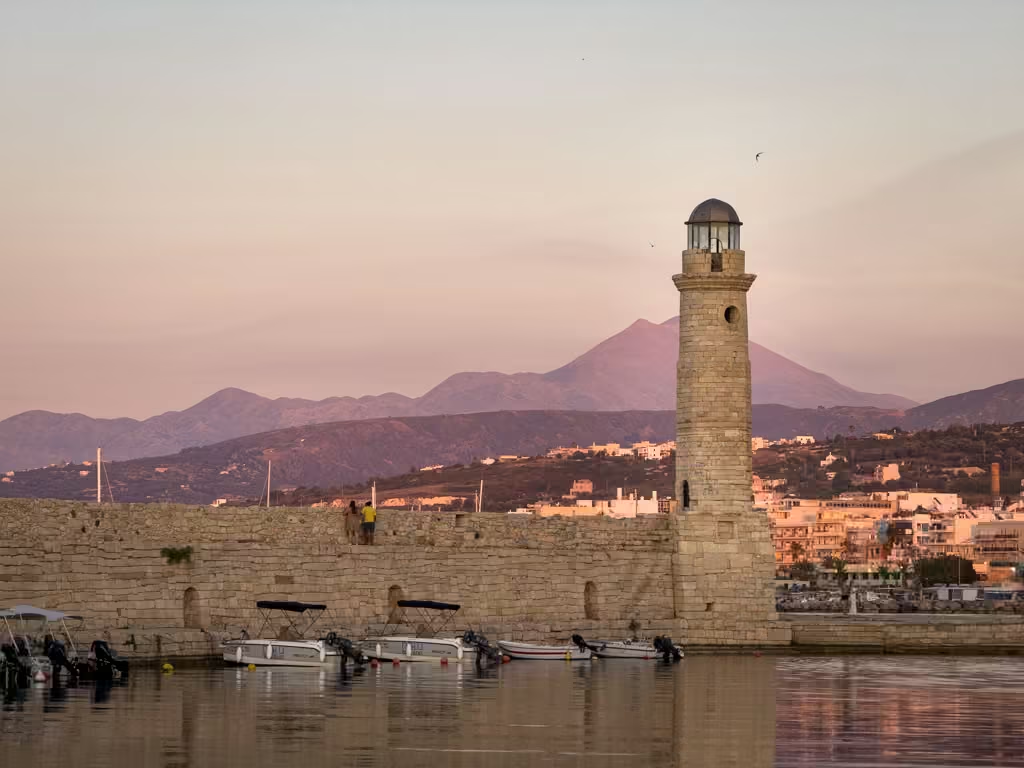
Once I know I have, say, 10 full days on the ground, everything becomes clearer.
That’s Athens plus two islands in the same region.
Not four islands scattered across the map.
Not a geography experiment.
If you already have your dates but pacing feels uncertain, an itinerary review is exactly where that gets sorted before it becomes a problem on the ground.
The biggest shift I made in planning Greece was this:
I stopped asking, “How much can we see?”
And I started asking, “How much can we actually enjoy?”
Those are two very different questions.
Now that we’ve locked in your days, we can move to the part that causes the most decision paralysis:
Choosing the right region.
Step 2: Choose the Right Region, Not Just the Prettiest Island
Here’s where most first-time travelers planning 7 to 14 days in Greece get stuck.
They don’t choose an island.
They choose five.
Because they all look stunning.
And they are.
That’s the problem.
But when you’re figuring out how to plan a trip to Greece, the secret is this:
Choose your region first. Then choose your islands.
Not the other way around.
I learned this the hard way.
On one of our early trips, I paired islands based on vibes instead of geography.
Santorini and Mykonos made sense in my head because they’re both famous.
Then I started eyeing Crete.
And Corfu.
And suddenly my map looked like I’d thrown darts at Greece.
What I did not fully grasp at the time was how spread out Greece actually is.
Greece is the second most mountainous country in Europe. Outside of Athens, there is no sleek high-speed rail connecting everything.
Ferries are wonderful, but they are not teleportation devices.
Ports aren’t always near town centers.
Airports aren’t always central. Roads are winding. Transfers take time.
That “quick hop” between islands?
It can quietly eat half your day once you factor in getting to the port, boarding, docking, unloading, and getting to your hotel on the other side.
And when you mix regions, ferry and flight schedules get complicated fast, sometimes requiring backtracking through Athens.
The Big Island Groups, Simplified
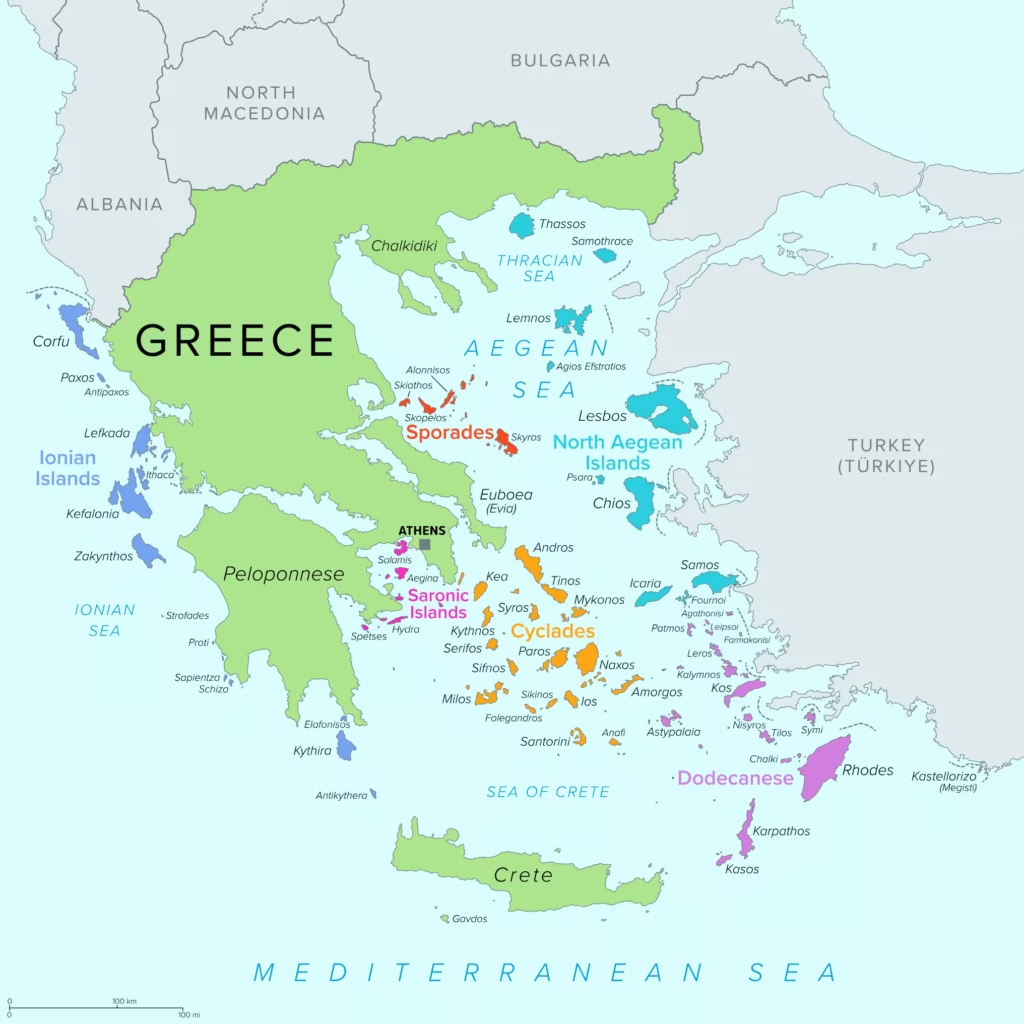
Without turning this into a geography lecture, here’s what matters.
The Cyclades (Orange)
White buildings. Blue domes. Dry landscapes. Iconic sunsets.
Santorini, Mykonos, Naxos, and Paros live here.
These islands connect relatively well to each other, which makes them ideal for a first trip.
Crete
Crete is its own beast. It is massive.
You can drive for hours and still be in Crete.
It deserves time and intention.
It does not pair well logistically with hopping across multiple other regions in a short trip.
The Ionian Islands (Blue)
Lush, green, dramatic cliffs.
Corfu and Kefalonia live here.
They sit on the opposite side of Greece from the Cyclades.
Combining them in one short itinerary means serious transit time.
If you try to combine Santorini, Crete, and Corfu in 10 days, we have a logistics problem. A big one.
This is why I always tell readers to understand the Greek island regions before picking specific islands.
Geography is your friend here.
My Rule for First-Time Visitors
If you have 7 to 14 days, pick one region.
Stay in that region.
Build depth, not chaos.
For example:
Athens plus two Cycladic islands.
Or Athens plus Crete.
Or Athens plus two Ionian islands.
But not Athens, Santorini, Crete, and Corfu in one trip.
That is not a vacation.
That is a transportation experiment.
If you’re unsure which vibe fits you best, my guide on how to choose the right Greek island for you will help narrow it down without triggering decision paralysis.
And if you want to understand how ferry routes actually work before committing, Island Hopping 101 breaks it down step by step so you’re not guessing.
Here’s the bigger picture.
When you mix regions, you spend your trip moving.
When you stay in one region, you spend your trip experiencing.
And trust me, once you’ve sat at a little taverna in Crete two nights in a row and the owner starts greeting you like a regular, you’ll understand why slower is better.
Now that we’ve chosen a region, let’s talk about the question everyone really wants answered.
Step 3: How Many Greek Islands Should You Visit?
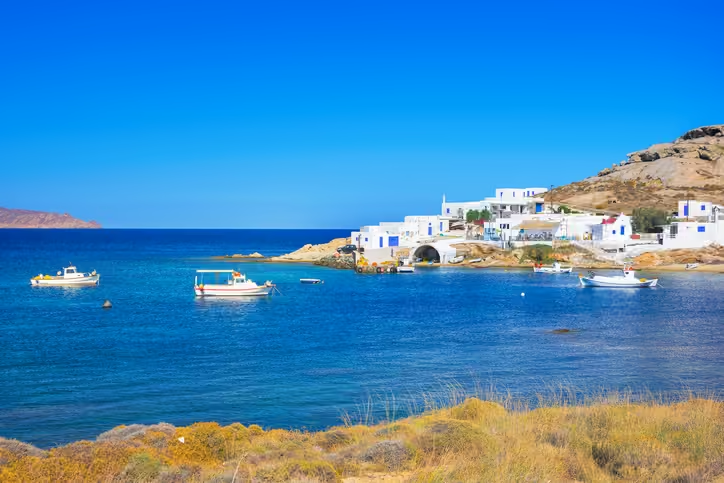
Let me say this as gently as possible.
If you are planning 7 to 14 days in Greece, you do not need four islands.
I know. I know.
On paper it looks amazing.
Athens. Santorini. Mykonos. Crete. Maybe toss in one more because “we’re already there.”
But here’s what that actually feels like in real life:
Wake up early.
Pack bags.
Check out.
Taxi to port.
Wait in port chaos.
2 to 4 hour ferry.
Unload luggage.
Find hotel.
Repeat.
That is not a vacation.
That is island cardio.
You see it. You snap a photo.
You leave before your nervous system even registers where you are.
And I say this with love because I’ve done it.
We once did three islands in a week.
By day six, we were exhausted, mildly irritated, and I was Googling cold medicine in Greece.
Paradise should not require pharmacy research.
So here’s the rule I follow now:
Bare minimum three nights per island. Preferably five.
Anything less than three nights is basically a transportation sandwich with a beach photo in the middle.
Let’s break it down realistically.
How to Plan a 7 Day Trip to Greece

Athens plus one island.
That’s it.
Two to three nights in Athens.
Four to five nights on one island in the same region.
If you try to squeeze in two islands in seven days, your trip becomes mostly logistics.
If you’re not sure what fits best, my guide on how many Greek islands should I visit walks through this in more detail so you can sanity-check your plan.
How to Plan a 10 Day Trip to Greece
This is the sweet spot.
Two to three nights in Athens.
Four to five nights on Island One.
Four to five nights on Island Two.
Same region. Strong ferry connection.
Minimal backtracking.
How to Plan a 14 Day Trip to Greece
You could technically do three islands.
But here’s my slightly controversial take:
Two islands, done well, often feels better than three done quickly.
When we spent two full weeks in Crete and split our time between two bases, something shifted.
The taverna owner recognized us.
We stopped rushing sunsets.
We had days where we just went to the beach and took a nap.
That’s when Greece started feeling like home.
You cannot get that feeling when you’re constantly watching the clock for the next ferry.
If you’re still tempted to add “just one more island,” pause.
Ask yourself this:
Do you want to collect islands?
Or do you want to experience one?
Those are very different trips.
And if you’ve already got a multi-island plan built and that quiet “is this actually doable” feeling won’t go away, that’s exactly what an itinerary review is for.
Now that we’ve settled the island math, let’s talk about something that can quietly make or break your entire trip.
Where you stay.
Step 4: Where to Stay on Each Island Matters More Than You Think

If you want to quietly sabotage your Greece trip, book a gorgeous hotel in the wrong location.
I say that with love, and experience.
When people are figuring out how to plan a trip to Greece, they obsess over which island.
But where you stay on that island?
That can completely change your trip.
An island isn’t one vibe.
It’s multiple micro worlds connected by winding roads and very enthusiastic hills.
Let me tell you a story.
We once booked a stunning beachfront property.
Gorgeous views.
Steps from the water.
It looked dreamy online.
What the listing didn’t emphasize was that it sat at the end of a dusty dirt road that took forever to navigate.
During the day? Fine.
At night? Dark. Bumpy. Slightly apocalyptic.
We found ourselves skipping dinners in town because the drive back felt like an off-road rally stage.
Beautiful hotel. Wrong location.
Town vs Beach: Choose Intentionally
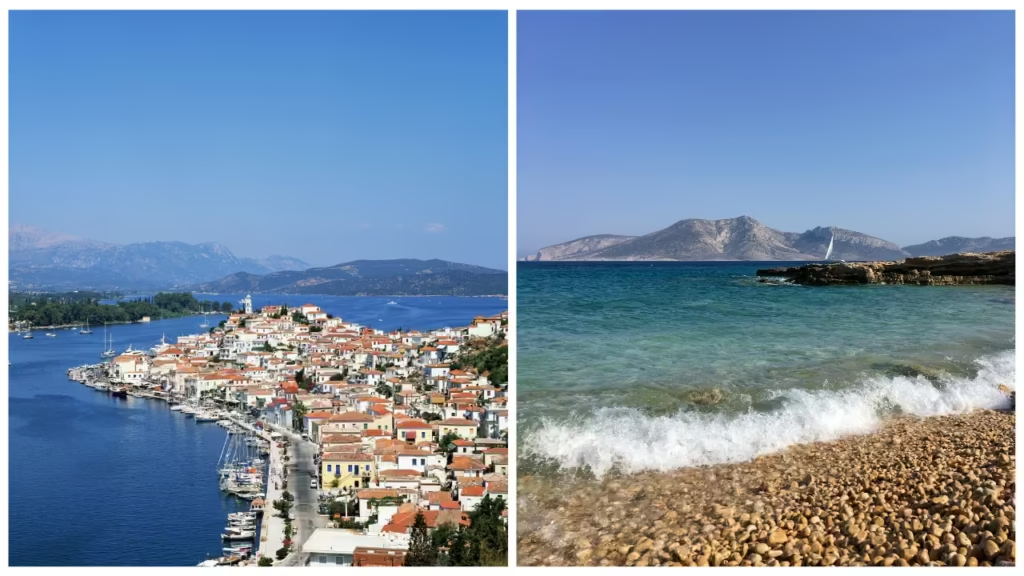
Here’s how I think about it now.
If we’re renting a car, I usually prefer staying in or near town.
Why?
Because we can explore beaches during the day, come back, park once, and then walk to dinner.
Wander. Stay out late. Grab gelato.
No driving in the dark. No hunting for parking at midnight.
If you stay directly on a beach, understand this:
Many beaches that are buzzing during the day turn into ghost towns at night.
If you’re okay with quiet evenings, amazing.
If you want energy, restaurants, and strolling, town wins.
Public Transportation vs Car Rental
This decision matters before you book.
If you’re relying on buses, stay somewhere genuinely well connected.
Not “a 15 minute walk up a hill from the nearest stop.” I promise that hill feels much longer at 3 pm in July.
If you’re renting a car, check realistic parking access.
On islands like Naxos and Crete, a car is a huge advantage.
On Santorini and Mykonos, I usually skip it and rely on Welcome Pickup transfers and local transport.
And yes, I’ve underestimated terrain before.
Santorini’s caldera views are stunning.
But if your hotel involves 200 uneven stairs with no handrail and you’re dragging luggage?
That Santorini sunset better be life-changing.
Before booking anywhere on the caldera, read my transportation guide for Santorini so you understand exactly what “cliffside access” actually means.
My Personal Non-Negotiables

We are carry-on only. Always.
So for me, a washing machine is non-negotiable.
I want clean beach towels and fresh clothes without overpacking.
I also check bed size.
Many Greek accommodations use full beds.
Totally fine.
But if you’re used to a queen or king and suddenly you’re in a full, you will be spooning whether you planned to or not.
And if we’re traveling as a family, I will absolutely splurge for two bedrooms if possible.
Space equals sanity.
If you’re narrowing down neighborhoods in Athens, my Athens neighborhoods guide breaks down which areas are actually convenient versus just trendy on a map.
For specific islands, I have detailed guides on where to stay in Santorini, Mykonos, Naxos, and Crete so you’re not guessing based on photos alone.
Here’s the bigger picture.
A great hotel in a bad location feels frustrating.
A good hotel in a great location feels magical.
Now that we’ve chosen Greek islands and picked smart bases, let’s tackle the part that causes the most anxiety for first timers:
Flights. Ferries. Transportation logistics.
This is where most people overcomplicate things.
Let’s simplify it.
Step 5: Flights, Ferries, and Transportation Logistics
This is the section that makes first-time Greece travelers spiral.
You’re fine choosing islands. You’re fine booking hotels.
Then you open a ferry website and suddenly it feels like you’re decoding a NASA launch schedule.
Relax.
It’s not that complicated once you understand a few simple rules.
When to Book Flights to Greece

If you’re flying from the U.S., I recommend booking at least six months in advance.
Earlier if you’re using points.
I book flights the second award seats open because I’m aggressive like that.
But even if you’re paying cash, earlier usually means better pricing and better routing.
And yes, most of the time, flying into Athens makes the most sense.
Even if your dream island is Santorini.
Why?
Because Athens is the main hub.
Many island flights connect through it anyway.
Direct international flights to smaller islands are limited, often seasonal, and usually more expensive.
So unless you have a very specific routing strategy, start in Athens.
Greek Ferry vs Flight: Here’s My Rule
If the ferry takes more than about two to three hours, I usually fly.
If it’s under two hours, I take the ferry.
Why?
Because once you factor in airport arrival time, security, boarding, baggage claim, and transfers, short flights don’t actually save much time.
But a five-hour ferry? That’s half your day gone.
I’d rather be on a plane for 45 minutes.
Also, if you get seasick, choose the larger conventional ferries that carry cars.
They’re slower, yes.
But they’re far more stable.
The fast catamarans can feel like you’re inside a washing machine if the wind picks up.
I learned that one the hard way.
Biggest Ferry Mistakes I See

Waiting too long to book during peak season.
Assuming every island connects directly to every other island, every day.
Not factoring in port transfers.
Ports are not always in town.
Sometimes they’re a 20-minute drive away.
Sometimes longer.
And unloading 300 passengers at once does not equal instant taxi access.
This is why staying in one region makes life dramatically easier.
If you haven’t read Island Hopping 101 yet, do that before you finalize anything.
It will save you from building a route that looks logical on Google Maps but chaotic in real life.
If you want step-by-step help booking, I walk through how to use Ferry Hopper so you’re not guessing what all those departure times and vessel types actually mean.
Taxis Are Not Everywhere
Especially in Santorini and Mykonos.
People assume taxis function like New York.
They do not.
There are limited taxis.
In peak season, they are in high demand.
You cannot always just “grab one.”
This is why I usually skip renting a car in Santorini and Mykonos and rely on Welcome Pickup transfers and local buses instead.
In Crete and Naxos, though?
Rent the car.
Absolutely.
Those islands are large, beaches are spread out, and a car changes everything.
If you’re navigating Athens, the metro and buses work beautifully.
My Athens transportation guide breaks that down so you don’t overthink it.
Here’s the key mindset shift:
Transportation in Greece is not hard.
It just requires realistic timing.
Build in buffer.
Avoid backtracking.
Respect geography.
And it works beautifully.
Now let me show you what a realistic 10-day Greece trip actually looks like when you put all of this together.
Step 6: What a Realistic 10 Day Greece Trip Actually Looks Like
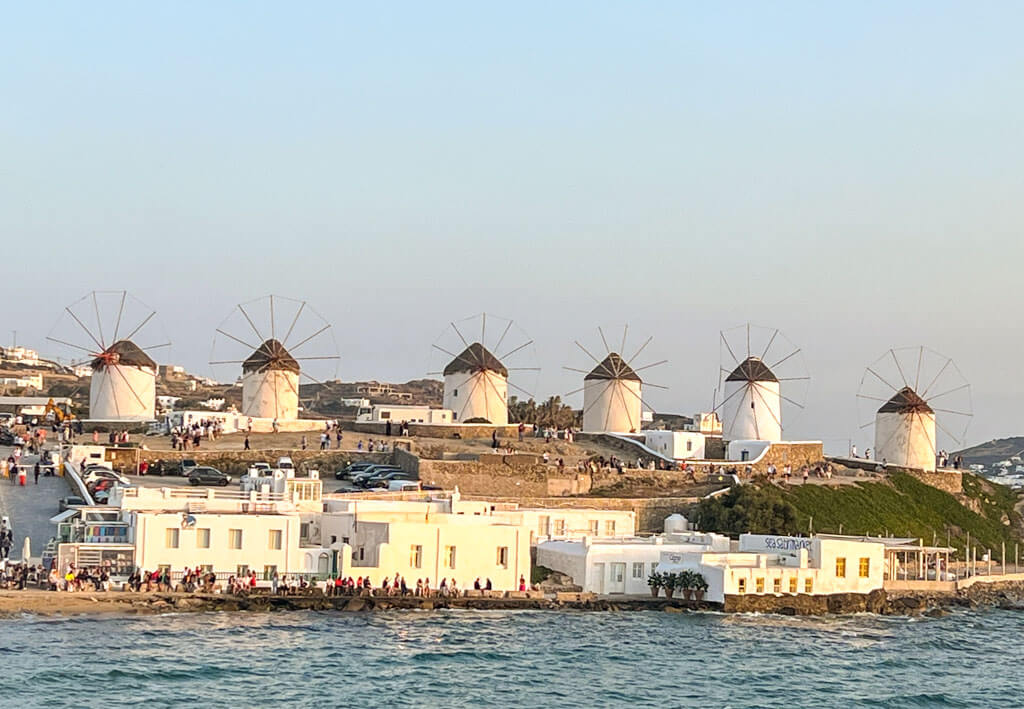
If you’re planning 7 to 14 days and trying to figure out how to plan a trip to Greece without turning it into a logistical obstacle course, this is the model I come back to again and again.
Ten days is the sweet spot for most U.S. travelers.
And here’s what that actually looks like:
Athens , 2 to 3 nights
Island One , 4 to 5 nights
Island Two , 4 to 5 nights
Same region. Strong ferry connection. No backtracking.
That’s it.
No four-island circus.
No packing every other morning.
No racing sunsets.
Athens: Give It 2 to 3 Nights
Please do not treat Athens like a layover.
I see this constantly.
People fly in, sleep, and leave the next morning like Athens is just the airport that happens to have the Acropolis nearby.
No.
Give Athens time.
Walk Plaka at night.
Sit at a rooftop bar and watch the Acropolis glow.
Let your body adjust to the time zone instead of dragging it onto a ferry 12 hours later.
Athens is the grounding moment before the island magic.
If you’re unsure how to structure those first few days, my guide on how many days in Athens before Greek islands breaks it down so you don’t shortchange the city.
Island One: 4 to 5 Nights
This is where you settle in.
Unpack fully.
Actually put your clothes in drawers.
Stop checking your ferry app.
Four to five nights gives you space for:
- A beach day
- A boat tour
- Exploring different towns
- A long dinner that turns into a late night
- A “we’re tired, let’s nap and wander later” day
That last one matters.
If you only stay two nights, there is no margin for weather changes, ferry delays, or simply being human.
With five nights, you stop feeling like a visitor and start feeling comfortable.
Island Two: 4 to 5 Nights
Second island. Same region. Short ferry.
This gives you contrast without chaos.
Maybe the first island is dramatic and iconic.
The second is quieter and relaxed.
Or one is larger and exploratory. The other is small and beach-focused.
When we slowed down and gave each island real time, everything shifted.
We stopped performing the vacation and started actually enjoying it.
That’s the difference.
Here’s what this structure does emotionally:
It removes urgency.
You’re not constantly thinking, “We have to see everything today.”
You’re thinking, “We have time.”
And that mindset shift is the difference between coming home glowing and coming home needing another vacation.
If you’ve already mapped out three or four islands and something feels tight, an itinerary review can help you trim it down without losing what matters.
Greece Trip Planning Mistakes First Timers Make

If you only skim one section of this entire guide on how to plan a trip to Greece, make it this one.
These are the mistakes that quietly turn dream trips into “why are we stressed in paradise?” moments.
And I say this with zero judgment.
I’ve made almost all of them.
1. Trying to See Too Many Islands
This is the number one mistake.
Three islands in seven days.
Four islands in ten.
Mixing regions because “we’re already there.”
You’re not already there.
Every move means packing, checking out, port transfers, ferry schedules, and losing half a day to logistics.
Fewer islands. More depth. Better memories.
Every time.
2. Backtracking Without Realizing It
Backtracking is when your route zigzags across the map because you chose islands based on vibes instead of geography.
Santorini. Then Crete. Then back north. Then west.
On one early trip, I built a route that looked fine in theory.
In reality?
We spent so much time in transit that entire afternoons disappeared.
Now I sit down with a map before booking anything. If the line looks messy, the plan is messy.
3. Booking a Beautiful Hotel in the Wrong Location
The photos are dreamy. The reviews are glowing.
But it’s 20 minutes outside town. Up a hill. Limited transport. No parking.
Suddenly every dinner requires coordination.
Location matters more than aesthetics.
A great location can make an average hotel feel magical.
A bad location can make a stunning hotel feel inconvenient.
4. Assuming Taxis Are Everywhere
Especially in Santorini and Mykonos.
They are not.
There are limited taxis. In peak season, they’re constantly booked.
You cannot just wave one down like you’re in Manhattan.
If you assume transportation will sort itself out, stress follows quickly.
Plan transfers. Know bus routes. Or stay somewhere walkable.
5. Not Checking Terrain
Santorini caldera stairs.
Naxos dirt roads.
Crete mountain drives.
Google Maps does not prepare you for incline, road quality, or luggage reality.
If mobility is a concern, or you’re traveling with kids or heavy bags, this matters more than you think.
I’ve underestimated terrain before.
I don’t anymore.
6. Planning Greece Like It’s Italy
It isn’t.
There is no seamless train network connecting everything.
There are ferries. Flights. Mountain roads.
It’s incredible. It’s beautiful. It just requires intention.
Before you finalize anything, I recommend reading 30 things to know before going to Greece , not to overwhelm you, but to make sure nothing surprises you in a way that steals your joy.
Here’s the encouraging part.
None of these mistakes are hard to avoid.
You just need to slow down.
Plan with geography in mind.
Respect travel time.
Choose depth over volume.
Greece rewards intention.
Now let me show you what happens when you plan it that way instead of rushing through it.
And if you’re wondering whether one of these is hiding in your current plan, that’s exactly what an itinerary review catches before you land.
If You Plan Greece This Way, Here’s What Happens

When you plan Greece with fewer islands, smarter sequencing, and realistic pacing, something shifts.
The trip slows down.
In the best possible way.
You’re not watching the clock for your next ferry.
You’re not dragging luggage down cobblestone streets every other morning.
You’re not mildly irritated because you haven’t fully unpacked in a week.
Instead?
You wake up and think, “What do we feel like doing today?”
That question changes everything.
When we spent two weeks in Crete and split our time between just two bases, something shifted.
The barista recognized us.
The taverna owner greeted us like regulars.
We stopped trying to conquer the island and started living in it.
Beach days turned into sunset dinners without rushing.
Afternoons of doing nothing didn’t feel like wasted time.
They felt like the point.
And now, every time we land in Athens, it feels like coming home.
That doesn’t happen when you’re racing.
Because here’s the other version:
Too many islands.
Backtracking across regions.
Packing every other day.
By day six, you’re tired. By day eight, you’re snippy. By day ten, your body is waving a white flag.
I say that from experience. Overplanning will wear you down.
When you plan Greece like a checklist, it becomes a blur.
When you plan it intentionally, it becomes a memory.
You remember the smell of grilled octopus drifting through a quiet alley.
The way golden light hits white buildings at sunset.
The sound of the sea at night when everything finally goes quiet.
You come home not just with photos.
But with that feeling.
The one that says, “We did this right.”
The Greece Planning Framework (In 6 Simple Steps)
If you skimmed the guide, here’s the structure to follow:
- Start with your real number of days.
- Choose one region.
- Limit the number of islands.
- Stay at least three nights per island.
- Choose accommodations based on location, not just aesthetics.
- Book transportation with realistic timing and no backtracking.
That’s it.
Greece isn’t complicated.
It just rewards thoughtful sequencing.
If your current itinerary doesn’t fully match this framework, this is where I can help.
The Tools I Actually Use to Book Greece
You’ve got the framework. Here’s what to open next.
Flights: Start with Google Flights to find your routing and date range, then book direct with the airline. If you’re flying from the U.S., Athens is almost always your best entry point.
Ferries: I use FerryHopper to search routes and compare times. Book as early as possible in peak season, especially if you want cabin berths on overnight routes.
Airport Transfers: Welcome Pickup is what I rely on for stress-free transfers in Athens and on the islands. No hunting for taxis, no meter surprises.
Car Rental: For Crete and Naxos especially, I use Discover Cars to compare options. Book early in summer, availability disappears fast.
Travel Insurance: I use Seven Corners for every single trip we take, Greece included. One ferry cancellation, one unexpected clinic visit, one delayed bag, and it more than pays for itself. Don’t skip this one.
Want Me to Look at Your Greece Itinerary?

If you’ve already built a plan and you’re staring at it wondering,
“Is this realistic… or am I about to create a transportation marathon?”
That’s exactly what itinerary reviews are for.
You send me your full plan, dates, islands, hotels, transport, and I’ll go through it with a strategic eye.
I’ll flag:
- Backtracking that’s built into the geography
- Unrealistic ferry timing
- Overpacked pacing
- Location issues that could quietly frustrate you
- Easy tweaks that make the whole trip flow better
Sometimes it only takes one adjustment to make the whole route click into place.
If you want to travel Greece feeling confident instead of slightly nervous, an itinerary review is the simplest way to get there.
I review a limited number of itineraries each month.
Not ready for a full review? Grab my free Greece Starter Guide and start there.
More Greece Travel Tips
- Greek Island Hopping Itineraries for 7, 10, and 14 Days
- How to Choose Which Greek Islands to Visit (Without Regret)
- How Greek Island Regions Actually Work (And Why It Changes Your Itinerary)
- How to Plan a Trip to Greece Without Losing Your Mind
- How to Plan a Santorini Trip Without Losing Your Mind
- Mykonos vs Santorini: Which Island Is Better for You?
- 30 Things to Know Before Going to Greece


