

Sfakia Crete: The South Coast Town Most Tourists Never Find

This page may contain affiliate links. As an Amazon Associate, I earn from qualifying purchases. If you click on a link and make a purchase, I may receive a small commission at no extra cost to you. Thanks for supporting my work! You can read more in my Privacy Policy.
Sfakia is the part of Crete that most people never make it to. That is genuinely their loss.
If you’re looking for the quieter, wilder side of Crete, it’s probably in Sfakia.
I drove down from Chania during a 2 week Crete road trip and spent several days exploring the south coast, wandering through Chora Sfakion, and hitting beaches that required a boat to reach.
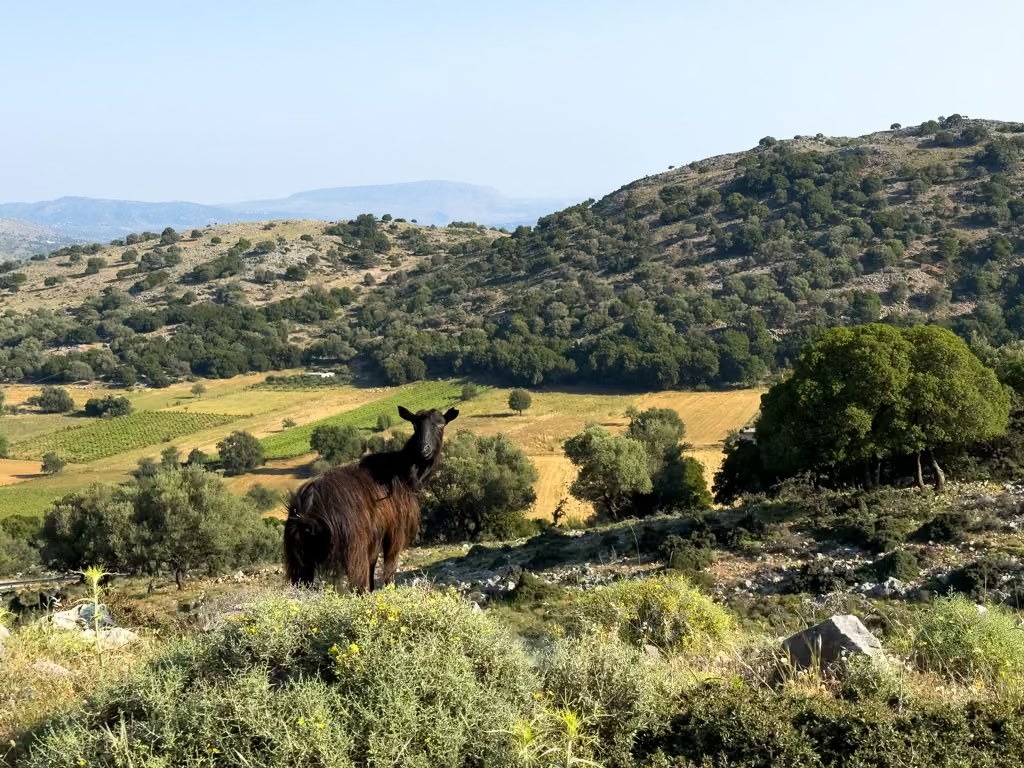
The switchbacks were no joke, the goats were absolutely feral about road etiquette, and by the time the Libyan Sea appeared at the bottom of the mountain, I got it.
I finally got why locals talk about this part of Crete the way they do.
Sfakia Crete sits about 75 kilometers south of Chania, and that distance does more than measure road time.
It separates the tourist packed north from a quieter, rawer version of Crete.
Tiny villages. Genuinely great food. Hiking trails that end at beaches you share with maybe 10 other people.
If you’re planning a Crete road trip, hiking Samaria Gorge, or just want to explore the island beyond the resorts, this guide to Sfakia covers how to get here, where to stay, the best things to do (including boat-access beaches), when to visit, and sample itineraries for three days or a full week.
Where Is Sfakia?
Sfakia is a small coastal region on the southern edge of the Chania prefecture in western Crete.
The main village, Chora Sfakion, sits right where the White Mountains drop into the Libyan Sea, about 75 kilometers south of Chania city.
Most people visiting Crete stick to the north coast. Chania, Rethymno, Heraklion, the big resort strips.
The south coast is a completely different world.
Fewer tourists, smaller villages, and a landscape that feels almost untouched compared to what you find up north.
Sfakia is also a hub for the south coast in general.
From Chora Sfakion you can catch ferries east to Loutro and Agia Roumeli, or west toward Gavdos Island.
If you’re planning to hike Samaria Gorge, you’ll finish the trail at Agia Roumeli and take a boat back to Chora Sfakion.
So even if Sfakia isn’t your main destination, there’s a good chance it ends up in your itinerary anyway.
How to Get to Sfakia, Crete
By Car
Renting a car is the best way to get to Sfakia, and honestly the most fun.
The drive from Chania takes about 90 minutes and it is scenic in a way that makes you pull over constantly.
You wind up through mountain villages, the road drops toward the sea, and at some point you round a bend and the Libyan Sea just appears below you.
It is a lot.
Fill up with gas in Chania before you leave.
Stations get sparse as you head south.
Parking in Chora Sfakion is easy along the harbor or in the village lots.
Now, about the Kallikratis Road.
Unless you are an adrenaline junkie who thinks hairpin turns on a narrow mountain road sound like a great time, avoid it.
It is genuinely not for the faint of heart.
We skipped it and took a route through the mountains that kept my knuckles their normal color.
I’ve got a map linked below so you can see exactly which way to go.
Regardless of which route you take, you will have company on the road.
The goats up here have absolutely no concept of traffic and zero interest in getting out of your way.
It is actually pretty awesome, just maybe don’t be in a rush.
By Public Bus
Buses run between Chania and Chora Sfakion several times a day during high season.
The trip takes just over 2 hours.
It is a good option if you would rather not drive, and the mountain views through the window are genuinely worth it.
Check schedules in advance since times shift between seasons, and arrive a few minutes early in summer because buses fill up fast.
By Taxi or Private Transfer
If you are arriving after a long travel day or just want zero logistics to manage, a private transfer is a solid call.
Direct drop off at your accommodation, no navigating unfamiliar mountain roads while jet lagged.
Welcome Pickups is who I use for transfers in Crete and they have never let me down.
By Ferry
Chora Sfakion is a small ferry hub for the south coast.
If you are combining Loutro, Agia Roumeli, or Gavdos Island with your visit, the ferry is a natural way in or out.
Most people who hike Samaria Gorge finish at Agia Roumeli and take the boat back to Chora Sfakion, so you may end up on it regardless.
Best Time to Visit Sfakia, Crete
The honest answer is that Sfakia is worth visiting in almost any season, but the experience is pretty different depending on when you show up.
Spring (March to May) brings temps in the low to mid 60s°F (around 17°C), wildflowers taking over the hillsides, and a quiet energy that feels almost secret.
Hiking conditions are genuinely ideal and the villages feel alive without being overrun.
If you happen to be there around Greek Easter, do not leave early. Celebrations in small villages like this are the kind of thing you tell people about for years.
Summer (June to early September) is peak season, and it is when I visited.
The sea is warm, the evenings are lively, and the beaches are absolutely at their best.
Temps climb into the upper 80s and low 90s°F (30 to 34°C) so sunscreen is not optional, it is survival gear.
This region fills up faster than you would expect for somewhere this far off the main tourist trail.
Fall (mid September to October) gets rave reviews from travelers who time it right.
The water stays warm from the summer, crowds thin out noticeably, and prices drop across the board.
If your schedule is flexible, this is the window a lot of experienced Greece travelers aim for.
Winter (November to early March) is quiet in a way that is either deeply peaceful or deeply boring depending on your personality.
Most places close up, temps sit in the mid 50s°F (around 13°C) with some rain, and you will have the mountains almost entirely to yourself.
If that sounds like a dream, go for it.
Whatever season you visit, build in more time than you think you need.
Sfakia has a way of making you want to cancel your onward plans.
Where to Stay in Sfakia, Crete
I visited Sfakia as a day trip during several days I spent exploring the south coast of Crete, and honestly it left me wishing I had built in at least a night or two right here in the village.
The south coast has a completely different pace from the north, and basing yourself in Sfakia overnight would let you really settle into it.
If I were going back, here is exactly where I would look.
One thing that is clear even as a day tripper: most accommodation in Sfakia is small and family run.
You are not checking into a Marriott.
You are checking into someone’s life’s work, and that energy comes through in everything from the breakfasts to the unsolicited local recommendations you will inevitably receive.
Summer rates typically range from about $125 to $300 per night depending on how close to the water you want to be and how much polish you are after.
Chora Sfakion
Chora Sfakion is the most practical base for exploring the region.
Ferries leave from here, the tavernas are steps away, and you can be on a boat to a remote beach before your coffee gets cold.
Most guesthouses offer simple, clean rooms, Greek breakfasts, and balconies with sea views that will make you deeply unbothered about everything going on back home.
Best for: First timers, anyone doing day trips along the south coast, ferry hoppers.
Sofia’s Lovely Rooms sits right in the center of the village, is spotlessly clean, and has that quiet welcoming feel that makes you want to linger over breakfast.
Guests consistently rave about the hospitality.
→ Check availability at Sofia’s Lovely Rooms
The Authentic Village Boutique Hotel is a step up in terms of polish, with plush beds and modern touches that do not sacrifice any of the local character.
If you want comfort with personality, this one delivers.
→ Check availability at The Authentic Village Boutique Hotel
Loutro

Loutro is only reachable by boat or on foot, and that is entirely the point.
No roads, no cars, no noise except the sea.
I took the boat over from Chora Sfakion and walked through the village, and even just a few hours there was enough to understand why people come back year after year.
It is small, whitewashed, and sits in a crescent shaped harbor that looks almost too pretty to be real.
I am already plotting a return trip to actually spend a night or 2 here.
It is ideal for couples who want to completely decompress, or families with older kids who are up for a slower more unplugged kind of day. Your teenager will either love it or be mildly outraged by the lack of WiFi.
Worth the risk.
Best for: Couples, families wanting a slow travel day, anyone who needs to seriously decompress.
Hotel Daskalogiannis sits right on the waterfront with rooms that open directly onto the sea.
Guests love the balconies, the fresh breakfasts, and the fact that the ferry dock is basically at the front door.
Simple, peaceful, and perfectly placed.
→ Check availability at Hotel Daskalogiannis
Things to Do in Sfakia, Crete
Sfakia punches well above its weight for a region this small and this quiet.
You have got world class hiking, beaches that require a boat to reach, a car free village that feels like a fever dream in the best way, and a Venetian fortress with a ghost story attached.
Not a bad lineup for somewhere most tourists never even make it to.
Hiking Samaria Gorge

Samaria Gorge is one of those things that ends up on every Greece bucket list for a reason.
It is the longest gorge in Europe, stretching just over 16 kilometers from the pine forests of Omalos down to the Libyan Sea at Agia Roumeli, and the scale of it is genuinely hard to describe until you are standing inside it looking up at walls of rock on either side.
Getting there from Sfakia is straightforward.
Buses and taxis run up to the Omalos trailhead in the morning, you hike down, swim at Agia Roumeli, and catch the ferry back along the coast to Chora Sfakion.
The whole thing works like a loop and it is one of the most satisfying days you can have in Crete.
It is a long day, around 6 to 7 hours of walking, so wear real shoes and bring more water than you think you need.
The trail is well marked and manageable for most reasonably active people, but this is not a flip flops and a tote bag situation.
Imbros Gorge
Samaria gets all the attention but Imbros Gorge is honestly the one I would recommend first for most travelers.
It is shorter at around 8 kilometers, less crowded, and the logistics are much simpler.
You start in the village of Imbros and finish near Komitades, which is just a short drive from Chora Sfakion.
No early morning bus scramble, no long ferry wait at the end.
The gorge itself is gorgeous in a quieter, less produced way than Samaria.
Rugged walls, shaded pathways, wildflowers, the occasional goat making a surprise appearance.
It takes around 2 to 3 hours depending on your pace, which makes it a realistic half day even if you want to hit a beach afterward.
If you are traveling with kids or anyone who is moderately active but not training for anything, Imbros is your gorge.
Save Samaria for when you have a full free day and serious hiking shoes.
Best Beaches in Sfakia Crete
This is honestly one of my favorite things about the Sfakia coastline.
Sfakia sits within the broader Chania region, which has some of the most varied and spectacular beaches in all of Crete.
If you are planning to explore beyond the south coast, the beaches in the Chania region are worth a dedicated day or two.
Some of the best beaches around Sfakia are not accessible by road at all.
You get there by boat, which means the crowds stay manageable and the payoff feels earned.
Local boat taxis run regularly from Chora Sfakion and Loutro, and you can hop between stops pretty easily.
Here are the ones worth knowing about:

Sweet Water Beach (Glyka Nera) is named for the fresh water springs that seep right up through the pebbled shore.
The water is cool, clear, and an almost unreal shade of blue.
Bring water shoes because the pebbles are no joke, but that is also exactly why it stays less crowded than the sandy beaches up north.
Ilingas Beach sits beneath dramatic cliffs with sea caves you can swim into.
The color of the water here is the kind of thing that makes you question whether your camera is actually capturing it accurately. It is.
Marmara Beach sits at the mouth of the Aradena Gorge where white rocks meet turquoise water.
But the real highlight is the sea caves you can swim through right there at the beach.
I am not exaggerating when I say swimming through those caves was one of the most surreal experiences of that entire trip.
The light, the water, and on the day we went, a lineup of local party boats blasting fun Greek music from their boats.
We were swimming through ancient sea caves to a full soundtrack and honestly it was perfect.
If you have time for only 1 beach along this coastline, make it Marmara.
Loutro

Loutro is one of those places that feels slightly unreal the moment you step off the boat.
No roads, no cars, just a small crescent shaped harbor lined with whitewashed houses, blue doors, and tavernas with tables practically in the water.
We came over by boat from Chora Sfakion and even just a few hours there was enough to completely reset the nervous system.
It is genuinely one of the most peaceful places I have been in Crete, and Crete is already pretty good at peaceful.
The vibe is slow by design. You swim, you eat, you sit and watch the boats.
That is the whole agenda and it is a great one.
For couples it is incredibly romantic, and for families with older kids it is the kind of place where everyone actually unplugs without being told to.
You can visit as a day trip from Chora Sfakion, which is what we did, but I would come back and stay at least a night or 2.
Waking up to that harbor with nowhere to be sounds pretty close to perfect.
Boat taxis run regularly between Chora Sfakion and Loutro so the logistics are easy.
Just check the schedule in advance so you are not stuck waiting longer than you planned.
Frangokastello
Frangokastello is about a 30 minute drive east of Chora Sfakion and it is worth every minute of that drive.
You round a bend and suddenly there is a perfectly preserved Venetian fortress sitting on a flat sandy plain with the Libyan Sea behind it and the White Mountains above it.
It is one of the more dramatic landscapes I have seen in Crete, and Crete sets a high bar.
The fortress was built in the 14th century to defend against pirates and later became a site of fierce Cretan resistance.
There is a local legend about the Drosoulites, shadow figures said to appear near the fortress in late May, believed to be the ghosts of Cretan fighters who died defending it.
Whether you believe in that sort of thing or not, standing inside those walls and looking out at the sea makes it pretty easy to understand why the story stuck around.
The beach at Frangokastello is sandy, wide, and shallow, which makes it one of the better options along this coastline if you are traveling with kids.
The water is calm and the whole setup is relaxed in a way that invites a long lazy afternoon rather than a quick stop.
If you are renting a car and have a flexible day, pairing Frangokastello with a drive along Crete’s south coast makes for an incredible day out.
Where to Eat in Sfakia

Sfakia is not the place to order a salad and play it safe.
The food here is rooted in the mountains and the sea around you, and the locals are quietly, intensely proud of it.
Goat from the hills above, fresh fish pulled in that morning, olive oil that tastes like it was pressed yesterday.
This is not resort food dressed up to look authentic.
This is just actual Cretan cooking, and it is incredible.
Our guide Christos spent a solid portion of our Crete sailboat tour talking about the goat.
Not the scenery, not the history. The goat.
He was so emphatic about it that we basically walked straight off the boat and into Lefka Ori in Chora Sfakion to order it.
Fall off the bone tender with a depth of flavor you only get from an animal that spent its whole life wandering a Cretan mountainside.
Christos knew what he was talking about. If you see goat on the menu anywhere in Sfakia, just order it.
Now let’s talk about sfakianopita because it is one of my favorite things to eat anywhere in Greece and I need you to understand what you are getting into.
Picture a thin soft pastry shell that you cut into to reveal warm gooey salty cheese inside, finished with a drizzle of local honey.
Pillowy. Gooey. Salty. Sweet. All in one bite. The textures alone are worth the drive down from Chania. I am not being dramatic.
Okay maybe a little dramatic. But try it and tell me I am wrong.
Other things worth ordering wherever you end up: Dakos, which is crisp bread softened with grated tomato, sheep’s cheese, herbs, and an aggressive pour of olive oil.
Fresh grilled fish or octopus eaten while watching the boats in the harbor.
And whatever the kitchen is slow cooking that day, because in Sfakia it is almost always worth asking.
One more thing, and this applies to all of Crete really. Raki after a meal is not optional.
It is just how dinner ends. very single meal we had on this trip, a small glass appeared on the table without us asking for it.
Finish it while your server is nearby and there is a solid chance another round materializes out of nowhere.
This happened to us at Lefka Ori and honestly at every taverna we sat down at in Crete.
Just go with it. It is one of those small moments that makes you realize you are not on a regular vacation anymore.
A Brief History of Sfakia

Sfakia has a reputation in Crete for being fiercely independent, and that reputation is completely earned.
The people here held out against both the Venetians and the Ottomans for longer than almost anywhere else on the island.
There is a stubborn, proud energy to this place that you pick up on even just walking through the village.
The most striking piece of history you will encounter is the WWII evacuation memorial, sitting quietly on the path down to the port.
It is small, easy to walk past if you are not looking for it, but worth stopping at.
Between May 28 and June 1, 1941, around 17,000 British, Australian, and New Zealand soldiers who had fought alongside Greek forces in the Battle of Crete were evacuated from this bay.

From this exact stretch of coastline.
My son spent a good chunk of time reading every single plaque and panel on the memorial, which honestly surprised me in the best way.
There is also a cannon there that caught his attention immediately and did not let go.
If you are traveling with teenagers who claim they are not into history, bring them here anyway.
The story tells itself.
Standing there looking out at that water knowing what happened here is one of those moments that puts everything else into perspective. Take 5 minutes to stop.
It costs nothing and it adds a layer to Sfakia that makes the rest of your visit feel more meaningful.
How to Plan Your Time in Sfakia
The Day Trip from Chania
This is exactly how we structured our Crete road trip, and it works really well if Chania is your base.
The drive down takes about 90 minutes, which means you can leave after a slow breakfast and still have a full day on the south coast before heading back in the evening.
Here is how I would structure it:
Leave Chania by 7:00 AM to arrive around 9:00 AM.
The parking lot in Chora Sfakion is small and the cost is 5 euros. It fills up fast, so getting there early makes a real difference.
The drive is roughly 90 minutes but give yourself a full 2 hours, especially if you have a timed boat or tour to catch.
The mountain roads are winding and beautiful, and you will stop.
Not because you planned to, but because there will be goats.
Sunbathing directly in the middle of the road without a single care in the world, or scaling the side of a cliff face with a confidence that makes you question how it’s even possible.
Build in the buffer, enjoy the drive, and just accept that the goats are in charge up here.
From Sfakia port, jump on a boat taxi to Marmara Beach. Swim, explore the sea caves, and let the morning stretch out as long as it wants to.
Grab lunch back in Chora Sfakion at Lefka Ori and order the goat if it is on the menu. Trust me on this one.
After lunch, take the boat over to Loutro for the afternoon. Walk through the village, find a table at a waterfront cafe, and just sit for a while. That is the whole plan and it is a good one.
Head back to Chania in the early evening, stopping for photos on the way up through the mountains because the light at that time of day is something else.
Staying Longer: 2 to 3 Nights in Sfakia
If you have the flexibility to base yourself in Sfakia for a few nights, do it. A day trip gives you a taste but the south coast rewards slowness in a way that is hard to fully experience when you are watching the clock.
Here is how I would structure a longer stay:
Day 1: Arrive, check in, and decompress. Walk the harbor in Chora Sfakion, have a long dinner at a local taverna, and let the pace of the place reset you. Do not over plan this day.
Day 2: This is your big activity day. Hike Imbros Gorge in the morning, which finishes close to Chora Sfakion, then spend the afternoon on a boat tour along the coast hitting Marmara, Ilingas, and Sweet Water Beach. End the day with dinner and raki. Possibly more raki.
Day 3: Take the morning boat to Loutro and spend the day there. Swim, eat, walk the coastal path if you are feeling active. Take the late afternoon boat back and give yourself one last slow evening in Chora Sfakion before heading north the next morning.
If you have a 4th day, drive east to Frangokastello. The fortress, the beach, and the drive itself make for a perfect final day before heading back to Chania.
Is Sfakia Worth the Drive?
Yes. A hundred times yes.
Sfakia is the part of Crete that made me slow down and actually look around. The south coast feels like a completely different world from the north, and most people never make it here. That is both a shame and, honestly, a little bit your gain.
If you are building out a Crete itinerary and trying to figure out how to fit it all in without losing your mind in the process, I have got you. My free Greece Starter Guide covers 30 must know tips for first time visitors, a realistic packing list built specifically for Greece’s terrain and weather, and the key resources I use and trust for every trip.
It is the no stress starting point I wish I had on my first trip.
FAQ About Sfakia, Crete
Is Sfakia worth visiting in Crete?
Yes, especially if you want to see a side of Crete that most tourists never reach. Sfakia is quieter, wilder, and more authentic than the resort heavy north coast. The hiking, the boat access beaches, and the food alone make it worth the drive.
How do I get to Sfakia from Chania?
The easiest way is by rental car. The drive from Chania to Chora Sfakion takes about 90 minutes but give yourself 2 hours, especially if you have a timed boat or tour. Public buses also run several times a day during high season. Avoid the Kallikratis Road unless you are comfortable with very narrow, steep mountain driving.
Can you visit Sfakia as a day trip from Chania?
Yes, and it works really well. Leave Chania by 7:00 AM to secure parking in Chora Sfakion, then spend the day doing a boat tour to Marmara Beach, lunch at a local taverna, and a boat trip to Loutro in the afternoon. You can be back in Chania by early evening.
What is the best beach in Sfakia?
Marmara Beach is the one I would send everyone to first. It sits at the mouth of the Aradena Gorge, has sea caves you can swim through, and is only reachable by boat. Sweet Water Beach (Glyka Nera) is a close second, named for the fresh water springs that bubble up through the pebbled shore.
What should I eat in Sfakia?
Order the sfakianopita first. It is a thin pastry filled with warm gooey cheese and drizzled with local honey, and it is one of the best things you will eat in all of Crete. After that, if you see roasted goat on the menu, order it. The goat in this region is exceptional.
Is Sfakia good for families?
Really good. Imbros Gorge is manageable for most kids and teens. The WWII evacuation memorial in Chora Sfakion is small but genuinely fascinating, especially for older kids. The boat access beaches are fun and the overall pace is relaxed enough that nobody feels rushed.


